ANIME TYPE GUIDE
What does
dere mean?
In anime fandom, a dere type describes how a character shows affection. The ending comes from Japanese deredere (でれでれ), which can describe acting lovestruck. The rest of the word tells you what that affection looks like.
Take the Dere Test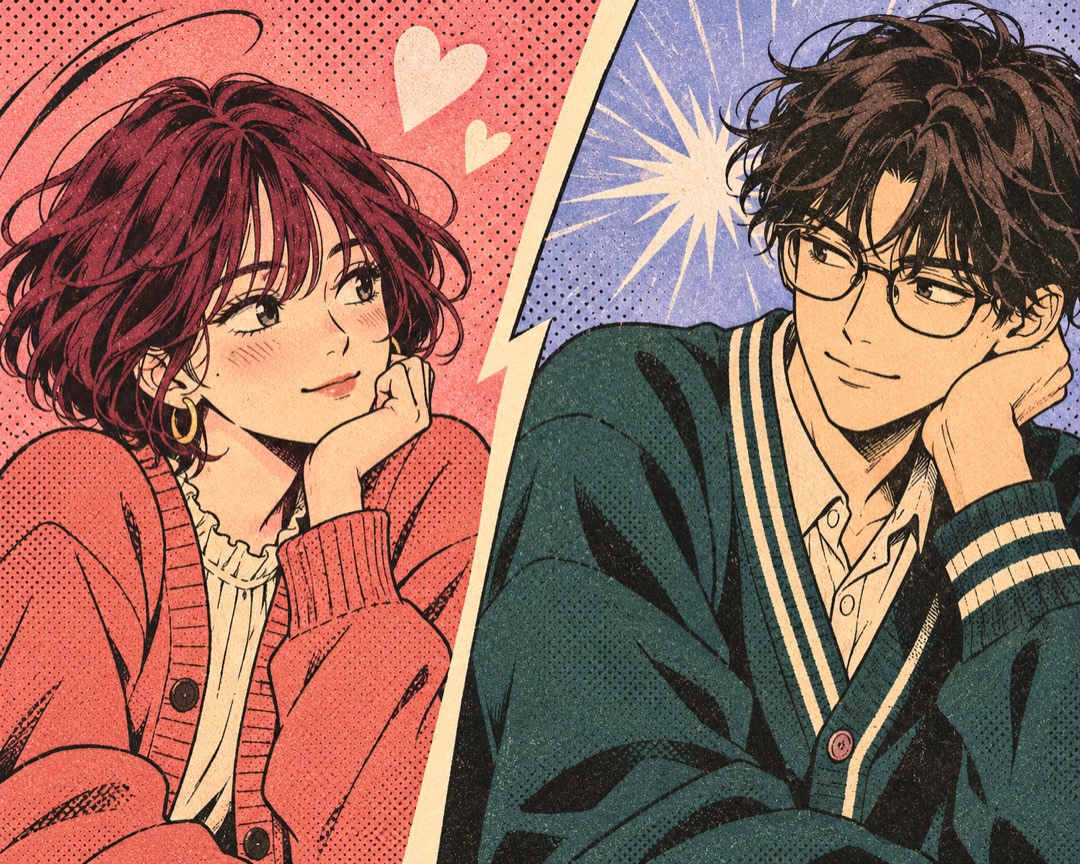
Fans use many more labels. These are the seven outcomes available on DereKind, each with an original scene that shows what the label can look like.
| Type | How affection shows up | In an original scene |
|---|---|---|
| Tsundere | Teases or deflects before showing warmth. | “I only brought an extra because you always forget yours.” |
| Kuudere | Stays composed and shows care through practical acts. | Checks the forecast and puts an umbrella beside your bag. |
| Dandere | Hangs back in groups and opens up when comfortable. | Saves a compliment for the walk home, when it’s just the two of you. |
| Deredere | Expresses warmth openly and directly. | Tells you exactly why seeing you was the best part of the afternoon. |
| Himedere | Enjoys making affection feel like a special occasion. | Arranges a ceremonial picnic and announces the seat of honor. |
| Bakadere | Shows care through spontaneity and clumsy charm. | Mixes up the café order, then invents an award for your patience. |
| Yandere | In fiction, one attachment takes over the story. | Builds the whole day around being together and would rather cancel than make it a group outing. |
Imagine someone you like praises you in front of your friends. A Kuudere might say thanks in a steady voice and text you later. A Dandere might go quiet until they can thank you one on one. A Tsundere might tease you to cover up how pleased they are.
The useful distinction is what drives the reaction. Composure points toward Kuudere, shyness toward Dandere, and playful deflection toward Tsundere. A single reaction can fit more than one explanation.
Are dere and deredere the same thing?
Deredere is the Japanese source expression and also a fandom label for an openly affectionate character. The ending -dere appears in other labels for ways characters show affection.
How many dere types are there?
Fans use many labels and there’s no fixed count. DereKind has seven possible outcomes, including Tsundere, Kuudere, Dandere, Deredere, Himedere, Bakadere, and Yandere.
Am I Kuudere or Dandere if I’m quiet?
Think about why you go quiet. A Kuudere tends to stay composed and may show care through actions. A Dandere may have a lot to say but feel more comfortable opening up one on one.
What’s the difference between Tsundere and Kuudere?
A Tsundere may deflect a compliment with teasing before showing warmth. A Kuudere can accept it calmly and express warmth later through a small gesture.
Does getting Yandere mean I’m possessive?
Yandere is a fictional drama archetype. DereKind awards points for story choices that make one connection the center of the scene. A quiz result describes how your picks fit this scoring model.
Can guys be Tsundere, Kuudere, or Dandere?
Yes. Fans apply these tropes to characters of any gender. DereKind uses the same questions and outcomes for everyone.
Can an anime character have more than one dere type?
Fans often describe characters as blends. Someone may appear composed in public and become openly affectionate one on one. The scene and the relationship both matter.
Why did I get Yandere? See examples from the scoring.
Sources for terminology: Japanese dictionary entry for でれでれ and To Each Their Own: Reclaiming the Japanese Otome Genre.